
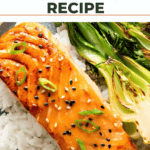
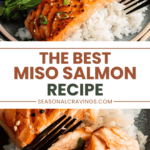

This Miso Salmon marinates in miso, mirin, sake, soy sauce, sesame oil, ginger, and garlic, then broils for about 10 minutes. The marinade turns into a sticky glaze while it cooks.

The top gets a little char, and the inside stays buttery and soft.
I make it when I want something that feels like a restaurant dinner but only takes a few minutes of hands-on time. The marinade does all the work.
Miso is salty and savory, mirin adds sweetness, and the ginger and garlic keep it bright.
Serve it with steamed rice, quinoa, roasted vegetables, or a simple salad. It's good warm or at room temperature, and leftovers are great on a salad the next day.
If you love this miso salmon, you've got to try my teriyaki salmon, this garlic and ginger salmon, and my easy honey garlic salmon.
Miso Salmon Ingredients
You'll find everything at a regular grocery store, usually in the Asian foods aisle. Miso is in the refrigerated section near the tofu.

- Miso - Any kind works. White miso is mild and a little sweet. Red miso is saltier and stronger.
- Mirin - A sweet Japanese rice wine that gives the glaze its shine.
- Sake - Japanese rice wine. It adds depth without tasting like alcohol after cooking.
- Soy sauce - Regular or low sodium.
- Roasted sesame oil - Don't skip it. A teaspoon adds a nutty flavor to the whole dish.
- Ginger - Finely grate fresh ginger so it mixes into the marinade.
- Garlic - Fresh is best, but jarred works in a pinch.
- Salmon fillets - Skin on or off. Look for fillets of similar thickness so they cook evenly.
- Neutral oil - Avocado, grapeseed, canola, or light olive oil.
See recipe card for quantities.
Make it Gluten Free
Soy sauce has wheat. Swap in tamari, which tastes very close.
Check your miso too. Barley miso (mugi miso) has gluten, and some blends add barley or wheat. Look for one labeled gluten free. Most mirin and sake are gluten free, but read those labels as well.
How to Make Miso Salmon


Make the marinade
Whisk the miso, mirin, sake, soy sauce, sesame oil, ginger, garlic, and 1 tablespoon of neutral oil in a bowl.
Marinate the salmon
Put the salmon in a shallow dish and pour the marinade over it. Press plastic wrap right onto the fish and refrigerate for at least 1 hour and up to 8.
Let it sit out
Take the salmon out of the fridge 30 minutes before cooking, so it cooks evenly.
Heat the broiler
Move a rack to the middle of the oven and heat the broiler for about 5 minutes. Line a baking sheet with foil and brush it with the remaining oil.
Broil the salmon
Scrape the extra marinade back into the dish and set the salmon on the foil. Broil for 8 to 10 minutes, until the top has a little char and the center reaches 125 to 135°F. For firmer salmon, move the rack down a notch and cook 10 to 12 minutes. The USDA recommends 145°F.
Thicken the glaze
While the salmon cooks, pour the leftover marinade into a small saucepan with a splash of water and simmer until it thickens.
Brush and serve
Brush the cooked salmon with the glaze and top with sesame seeds and sliced green onions.
Hint: Let the top get a little char. That's where the caramelized flavor comes from. Brush on the thickened glaze with a basting brush right before serving.

Substitutions
A few easy swaps if you're missing something.
- Mirin - Mix 1 tablespoon of white wine or sake with 1 teaspoon of sugar.
- Sake - Dry white wine or dry sherry.
- Soy sauce - Tamari, which is also the gluten free option.
- Salmon - Trout, Arctic char or black cod.

Variations
Change up the marinade to suit your mood.
- Spicy - Add 1 tablespoon of gochujang or 1 teaspoon of sriracha to the marinade.
- Citrus - Add fresh orange or lime juice to the marinade and finish with zest.
- Miso butter - Mix miso with softened butter instead of oil, then spread it over the salmon.
- Herb - Top with chopped cilantro or green onions before serving.

What to Serve with Miso Salmon
Steamed white or brown rice soaks up the extra glaze. Quinoa works too.
For a vegetable, try roasted broccoli, sautéed bok choy, or a cucumber salad with rice vinegar.
Want more salmon ideas for the week? Try my Greek Salmon and Bang Bang Salmon Bites next.
Equipment
I like to use a good metal pan for this. Line it well with foil to make cleanup easy. That's all you'll need besides a mixing bowl and a basting brush.

Storage
Let the cooked salmon cool to room temperature before storing to prevent condensation, which can lead to sogginess or spoilage.
Place the leftover salmon in an airtight container or wrap it tightly with aluminum foil or plastic wrap. Store in the refrigerator for up to 3 days.
For longer storage, wrap the salmon in plastic wrap and place it in a freezer-safe bag or container. Label with the date, and freeze for up to 3 months.
Make Ahead
Mix the marinade up to 2 days ahead and keep it covered in the fridge. Marinate the salmon in the morning, and it's ready to broil when you get home. Don't go past 8 hours, or the miso salt starts to change the fish's texture.
Tips for the Best Miso Salmon
Buy fillets of the same thickness - They'll finish at the same time.
Don't skip the sesame oil - It's only a teaspoon, but it adds a toasty, nutty flavor.
Grate the ginger and garlic fresh - Pre-minced works, but fresh tastes stronger.
Watch the broiler - The sugar in the mirin can go from charred to burned in a minute. Check at 7 minutes.
Scrape off the extra marinade - Thick clumps on top burn before the salmon is cooked.
FAQ
Yes! Thaw the salmon completely in the refrigerator overnight, or place it in a sealed bag in cold water to defrost faster. Pat it dry before marinating.
It can be. Use tamari instead of soy sauce, and check that your miso, mirin, and sake are labeled gluten free.
The salmon is done when it flakes easily with a fork and reaches an internal temperature of 145°F (63°C). It should appear slightly opaque in the center.
Sure. Bake at 400°F for 12-15 minutes. You won't get as much char on top, so brush on the glaze and broil it for the last minute if you want that color.
At least 1 hour and up to 8. After that, the miso can make the fish a little firm.
White miso is the mildest and a little sweet. Red miso is saltier and stronger. Both work. Start with white if you haven't cooked with miso before.
Related
Looking for other recipes like this? Try these:


Miso Salmon
Ingredients
- 2 tablespoons miso any kind
- 1 tablespoon mirin
- 1 tablespoon sake
- 1 tablespoon soy sauce
- 1 teaspoon roasted sesame seed oil
- 1 teaspoon ginger finely grated
- 1 teaspoon garlic finely grated
- 3 4-6 ounce salmon filets, skin on or off
- 2 tablespoons neutral oil divided
- Garnishes
- black and white sesame seeds toasted or untoasted
- green onions thinly sliced
Instructions
- In a medium bowl, combine miso, mirin, sake, soy sauce, roasted sesame seed oil, ginger, garlic, and 1 tablespoon neutral oil. Place salmon fillets in a shallow dish, pour over the marinade, wrap in plastic, and refrigerate for at least 1 hour but up to 8 hours. Make sure the plastic wrap forms a seal with the salmon.
- Remove salmon from the fridge and let it come to room temperature for at least 30 minutes.
- Cover a baking sheet with aluminum foil and brush with 1 tablespoon neutral oil.
- Gently scrape any excess marinade off the salmon and back into the shallow dish, placing the salmon on the aluminum foil lined baking sheet and pouring the remaining marinade into a small sauce pan.
- Move a rack in your oven to the middle position and set your oven to broil, letting it heat up for about 5 minutes.
- Broil salmon for 8-10 minutes until it reaches an internal temperature of 125-135 degrees and there's a little char on top. If you prefer firmer salmon, move your rack down one more notch and cook for 10-12 minutes or the internal temperature reaches 135-145.
- While the salmon is baking, add a splash of water to the marinade and thicken on medium heat.
- Remove the salmon from the oven and brush with the cooked marinade. Top with black and white sesame seeds and sliced green onion. Serve with white or brown rice and your veggie of choice.
Equipment
- 1 mixing bowl
- 1 Basting brush
Nutrition
Nutrition Disclaimer
All nutritional information provided is an estimate. For specific dietary needs or concerns, we recommend consulting a nutrition calculator or a qualified expert.


Karen Kelly
Karen Kelly is a nationally syndicated food and travel writer, founder of Seasonal Cravings, and co-founder of The Roam Report. She develops approachable seasonal recipes and covers travel and lifestyle trends. Her work has appeared in numerous media outlets, including Yahoo, Taste of Home, Apple News, NBC, FOX, and other national and regional publications.
Tell Us What You Think